 PT
PTCASE STUDY 03 • NEOFIN
✦ 8 min read
Faster agreements for overdue payments
Company
Neofin
Period
2025–2026
Role
Senior Product Designer
Team
Product, Engineering and Customer Success
OVERVIEW • 00
A flow for companies to negotiate overdue payments during a customer conversation and record new terms directly in the platform.
CHALLENGE • 01
The problem
Conversations with companies, summarized by Customer Success, showed a need to negotiate debt more quickly during service. Existing renegotiation depended on predefined settings and was completed by the customer in the portal. Companies lacked a way to open an overdue charge, agree new terms with the customer and formalize the agreement directly in the platform.
RESEARCH • 02
I synthesized requests from companies and Customer Success about negotiations conducted during service conversations.
I analyzed the renegotiation already available in the portal to separate reusable parts from what needed to change for company-led agreements.
I mapped a short flow from an overdue charge through commercial decisions, confirmation, creation of a new charge and updates to the related states.
DEFINITION • 03
Focus and direction
Agreements and renegotiation address the same financial problem at different moments. In self-service renegotiation, customers choose from predefined terms in the portal. In an agreement, a company leads the conversation, selects one or more charges for the same customer and sets the terms then and there. This distinction shaped the whole experience.
APPROACH • 04
How I worked
Because we knew the problem and could reference the portal renegotiation, discovery was short. I designed the flow and first form. Later iterations added down payments, installments, discounts, waived charges, email delivery and agreements covering multiple charges.
The journey connects receivables, charge details, agreement terms, confirmation and creation of a new charge. The design also had to make the original charge's state explicit and keep open, completed and canceled agreements traceable.
OPERATIONAL FLOW AND AGREEMENT RULES • 05
FEATURES • 06
Agreement from a charge
A company opens an overdue charge and proposes a new due date without interrupting its conversation with the customer.
Multiple charges for one customer
Eligible charges can be grouped into one proposal, simplifying negotiation and payment.
Flexible commercial terms
The flow supports down payments, installments, discounts, fee and interest waivers, new dates and different payment methods.
Confirmation, delivery and traceability
Before completion, the system summarizes the terms. It then creates the new charge, updates related states and emails the proposal.
Guidance in the product
Contextual guides explain selection, grouping and next steps to reduce uncertainty in a sensitive operation.
SELECTED SCREENS • 07
From the first charge to a traceable agreement
The material shows the operational flow, commercial rules and states across the experience.
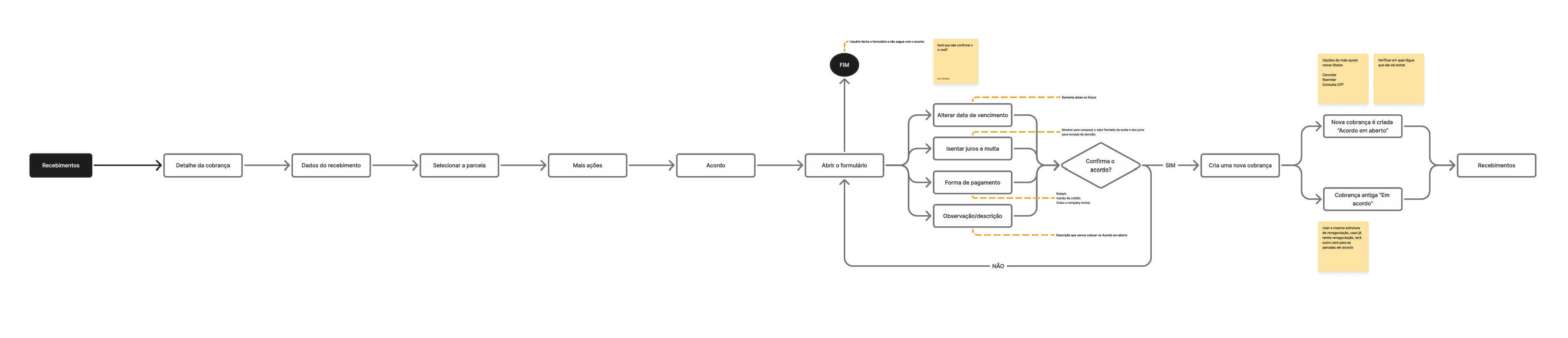
From receivable to new agreement
The flow maps entry from a charge, due dates, interest, payment method and description, as well as the states created after confirmation.
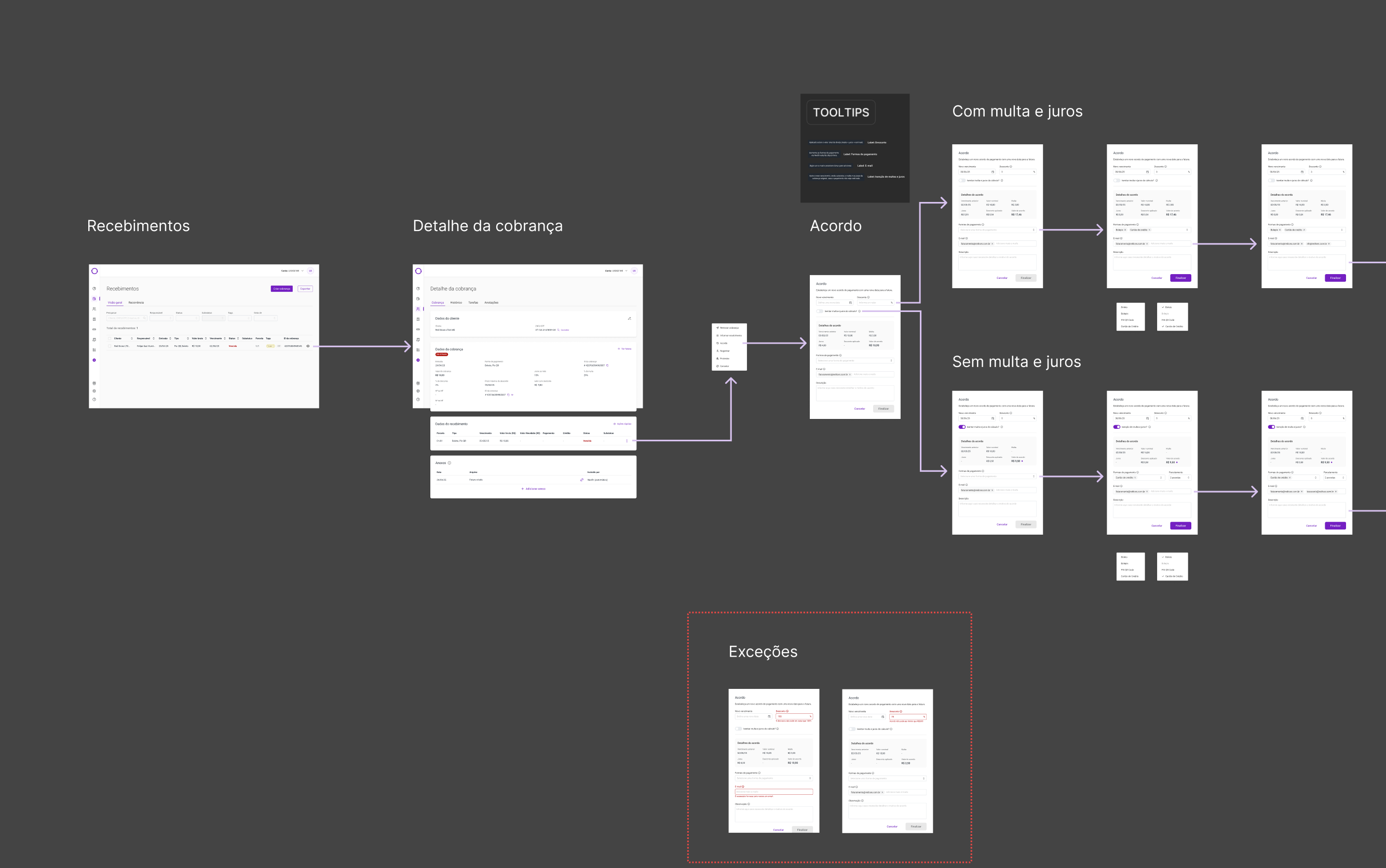
Rules, variations and exceptions
Exploration covered charges with or without penalties and interest, form states, supporting messages and error handling.
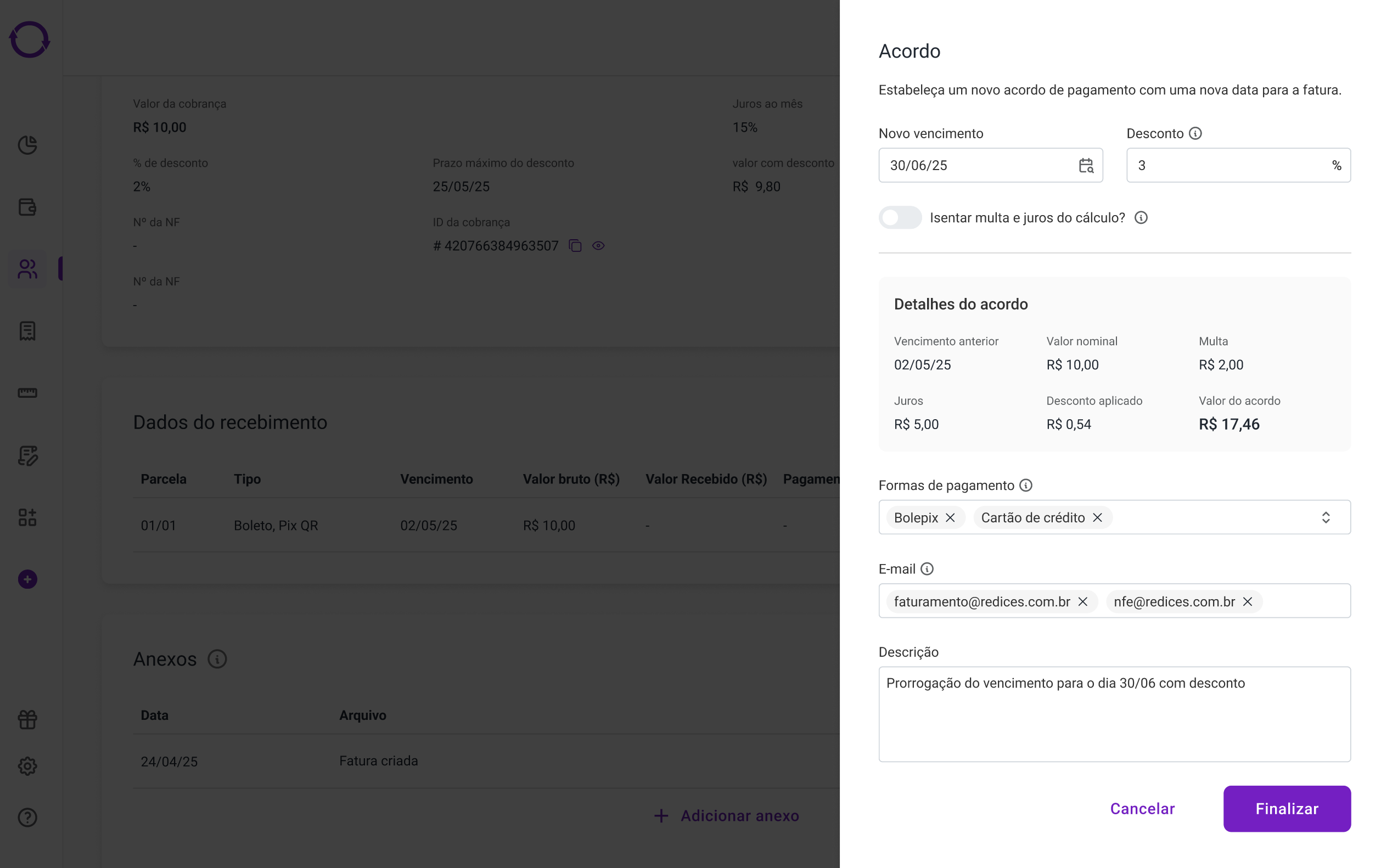
Agreement terms
The company sets due date, discount, penalty and interest, payment methods, recipients and a description to formalize the arrangement.
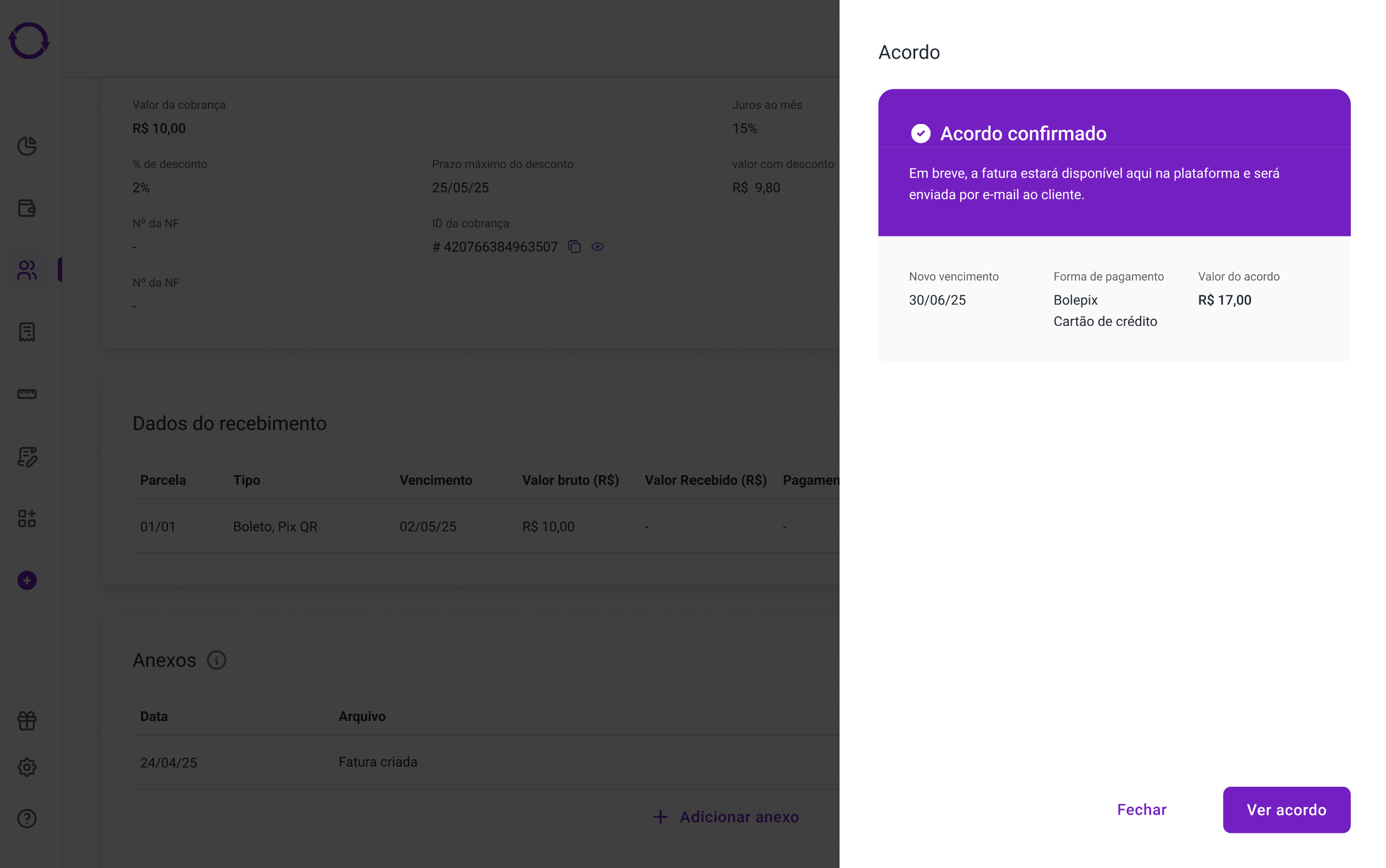
Confirmation and next step
The confirmation summarizes due date, payment methods and amount, and provides direct access to the agreement.
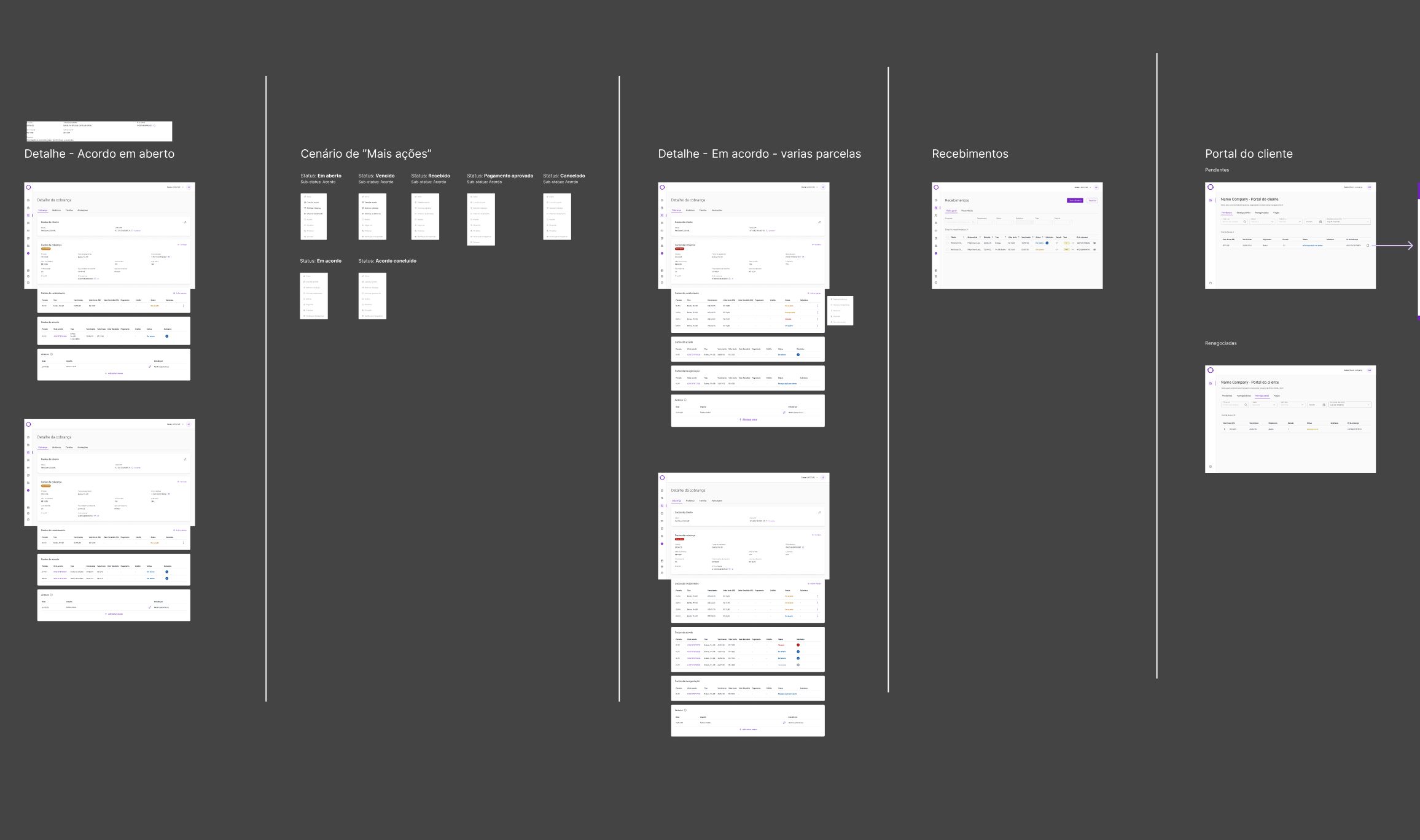
States and traceability
Open, completed and installment agreements remain visible in charge details, receivables and the customer portal.
TESTING • 08
How we validated
Validation followed the functional evolution. The first flow supported an agreement for one charge. Later versions incorporated questions and needs observed in use, including installments, multiple payment methods, several charges and contextual guidance.
RESULTS • 09
A direct path to negotiate overdue charges without depending on customer action in the portal
More flexibility to adapt terms to the real context of each negotiation
One experience for individual agreements and proposals covering several charges
LEARNINGS • 10
The renegotiation logic gave us a starting point, but agreements put a different person in control: the company agent. We needed to allow negotiation while making the rules and consequences for each charge clear.
NEXT PROJECT